
Matching Mechanics
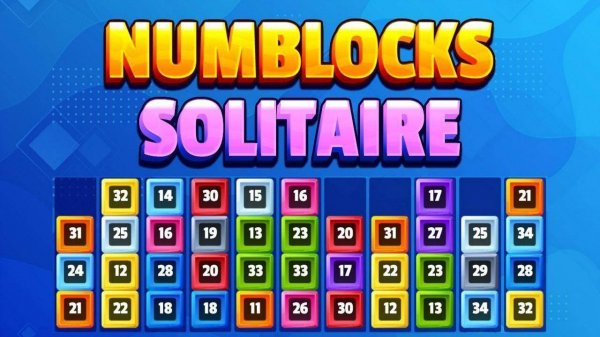
Players see several stacks of numbered tiles on a board. The objective is to pair tiles with the same number by moving them between stacks. A tile can only be placed on a stack where the top tile shows a higher number, or onto an empty stack. When two matching numbers become the top tiles of their stacks, they disappear. This simple rule set creates a satisfying puzzle where each decision affects future options.
Layout and Progression
Early rounds present straightforward arrangements with few stacks and low numbers. As players advance, the number of stacks increases and the tile values become more varied. Some layouts require several moves to create a single match, while others offer multiple pairing opportunities at once. This gradual increase in complexity keeps the experience fresh without overwhelming newcomers.
Visual Style and Atmosphere
The interface uses bright, clean colors and clear numerals on each tile. Stacks are arranged in a neat grid, making it easy to scan the board for potential matches. Animations are subtle, with tiles smoothly sliding between positions. The overall look is friendly and uncluttered, supporting focused play without visual distractions.
Strategic Thinking
Success depends on looking ahead. Players must consider which stacks to empty first, how to avoid trapping a needed tile under a higher number, and when to use empty stacks as temporary holding areas. The game rewards patience and pattern recognition rather than speed. There is no timer, so each move can be considered carefully.
Session Flexibility
Rounds can be completed in a few minutes, making this a good choice for short breaks. The lack of time pressure also allows for longer sessions when players want to tackle more complex puzzles. The undo option helps correct mistakes, and restarting a level is quick when a fresh approach is needed.






Comments
0 comments