
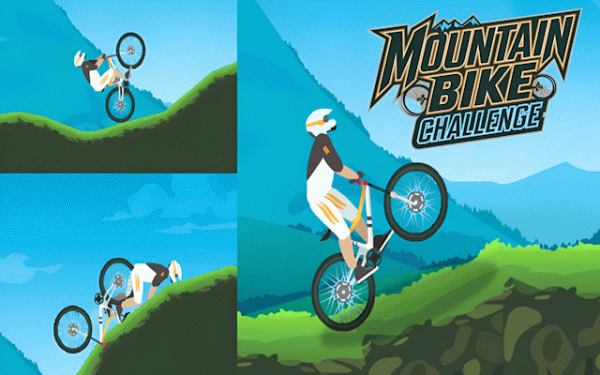
Core Gameplay Mechanics
Downhill Trail Master puts you in the rider's seat with a focus on realistic momentum and weight distribution. The bike responds naturally to terrain changes, meaning a sharp turn at high speed can easily lead to a spill if you don't lean correctly. You must constantly adjust your speed and angle to maintain control. This isn't about pressing buttons quickly; it's about reading the trail ahead and making smart decisions in the moment. Success comes from understanding how your bike behaves on loose gravel, steep drops, and tight switchbacks.
Trail Design and Atmosphere
The courses in Downhill Trail Master are designed to feel like real mountain descents. You'll encounter a mix of smooth sections where you can pick up speed, followed by technical patches filled with rocks, roots, and sudden changes in elevation. Each trail presents its own set of challenges, encouraging you to learn its layout and find the fastest line. The visual style keeps the focus on the action, with clear cues for upcoming obstacles. This design philosophy ensures that every run feels fresh and demands your full attention.
Control Scheme and Responsiveness
Whether you play on a phone or a computer, the controls are built for precision. On touchscreens, simple taps and swipes let you steer, shift your weight, and apply brakes. On a keyboard, arrow keys handle acceleration, braking, and leaning during jumps. This dual-input system means you can choose the method that feels most natural. The game does not rely on random elements; your performance is directly tied to how well you manage these controls. Mastering the input is a rewarding process that separates beginners from experienced players.
Progression and Skill Development
Progress in Downhill Trail Master is measured by your own improvement. There are no unlockable items or story elements. Instead, the game challenges you to beat your personal best times on each trail. This creates a loop where you replay courses to refine your approach. You might find a faster line through a rocky section or learn to carry more speed through a series of turns. The satisfaction comes from seeing your times drop as your skills grow. This structure suits players who enjoy self-directed improvement and competitive time trials.
Physics Simulation and Realism
The physics engine is the heart of the experience. Every bump, jump, and corner affects your bike's stability. If you land a jump with your wheels turned, you will likely crash. If you brake too hard on a downhill section, you might flip over the handlebars. These realistic reactions mean you must think ahead and react smoothly. The game does not forgive sloppy inputs, which makes clean runs feel genuinely earned. For fans of simulation-style sports games, this attention to detail is a major draw.





Comments
0 comments